Building Balaji Wafers Through Simplicity and Trust

Chandubhai Virani is the Founder and Managing Director of Balaji Wafers, one of India’s most successful homegrown FMCG companies. Starting from a modest cinema canteen in Rajkot in the 1970s, he built Balaji into a ₹5,000+ crore enterprise and one of India’s largest snack brands, with a dominant presence across western India and exports to over 25 countries.
Under his leadership, the company scaled without external capital for more than five decades, rejected multiple acquisition offers from global players, and became known for its unwavering focus on product quality, operational discipline, and customer value. In 2025, Balaji Wafers partnered with General Atlantic in its first external investment, valuing the business at approximately ~₹40,000 crore.
Chandubhai is widely respected for his simplicity, deeply hands-on leadership style, and belief that enduring businesses are built through trust, patience, and long-term thinking.
How India’s Biggest Wafer Brand Runs Without Sales Targets
Discover how one of India’s most successful consumer brands was built without sales targets, discounts, or a profit-first mindset.
In this conversation, Chandubhai shares the business philosophy and leadership principles that helped scale Balaji Wafers into a household name while preserving its culture, product quality, and long-term focus.
What you’ll learn in this episode:
- Why customer satisfaction, not sales targets, is the foundation of sustainable business growth.
- How to build a high-performance culture through trust, delegation, and ownership instead of pressure and KPIs.
- Why protecting organizational culture becomes critical as a company scales across markets and geographies.
- How operational excellence and close involvement with the shop floor drive product consistency and competitive advantage.
This episode is valuable for founders, CEOs, business leaders, and entrepreneurs looking to build a scalable business, strengthen company culture, and create lasting competitive advantage through simplicity, discipline, and a deep understanding of the customer.
Balaji Wafers Rejected 39 Investors in 50 Years. Here’s Why One Got In.
You’ve built a company. It works. It’s profitable. The question is whether it will survive you.
This episode explores the structural reasoning behind one of the most significant governance decisions in Indian family business: Balaji Wafers’ first equity dilution in fifty years, a 7% stake to General Atlantic, capped at 25%.
Chandubhai Virani’s motivation was not capital. It was accountability. His reasoning: in a family-owned company, the owner has no owner. A family member can drive the business into a ditch, and no one can stop them. Professional governance builds the correction.
What you’ll learn in this episode:
- Why professionalisation matters more than capital injection for family businesses approaching generational transition.
- How to build organisational depth so that no single person’s exit disrupts the company. Five senior Balaji leaders left for major competitors in one year. The numbers held.
- Why transparency and external accountability (SEBI, quarterly calls, analyst meetings) can strengthen a founder-led company rather than constrain it.
- How to evaluate investors not by their capital, but by their ability to help you build governance.
This episode is for founders, family business owners, and investors thinking about succession, governance, and long-term institutional value.
Also available on YouTube, Spotify and Apple Podcasts.
From ₹90/Month Canteen Worker to India’s ₹5,000 Crore Snack Empire
You’re building a family business constitution. Or you’re a founder-led company where conflict sits unresolved for weeks because no one wants to be the one who brings it up.
Chandubhai Virani runs a ₹5,000+ crore company on a single principle for conflict: fight in the morning, forget by the evening.
This episode surfaces the deeper logic behind that simplicity: why contentment is an operational advantage, why admitting mistakes should carry zero penalty, and why forcing change in a family business too quickly destroys what you’re trying to preserve.
What you’ll learn in this episode:
- Why “fight in the morning, forget by the evening” is a functional conflict resolution system at scale, and what makes it work.
- How Balaji maintains direct access between junior employees and the founder, and why that access is a cultural asset.
- The mistake policy that builds psychological safety: admit it and nothing happens; hide it and you’re out.
- Why Chandubhai advises against writing a family constitution too quickly. His reasoning: “Don’t change suddenly. It won’t digest.”
This episode is for founders, family business operators, and business leaders navigating co-founder dynamics, family conflict, and the tension between structure and culture.
Also available on Spotify and Apple Podcast
Chandubhai Virani Built a ₹40,000 Cr Company. He’d Leave It All for 250 Cows
Every founder reaches a moment where the metrics stop meaning what they used to.
Chandubhai Virani says he reached it years ago. Revenue, market share, brand: he removed them from his identity. What remains, in his words: “Millions are connected to us with trust.”
This final episode in a four-part series traces the failures that built Balaji Wafers: a famine that forced migration, shopkeepers rejecting early products, an automation investment that led to bankruptcy, and a pandemic that doubled output. Each catastrophe produced a structural pivot. The company never planned its way to ₹5,000 crore. It was pushed there.
What you’ll learn in this episode:
- How serial failure builds structural resilience. Each of Chandubhai’s three major setbacks (famine, bankruptcy, COVID) forced the next major capability leap.
- Why detachment from metrics can coexist with operational intensity. Chandubhai goes to the factory floor every day and listens to machines. He also says he hasn’t looked at where to invest money.
- What success means when you strip the conventional markers. Chandubhai’s answer has nothing to do with wafers.
This episode is for any founder or leader asking themselves what they’ve actually built, and whether the answer satisfies them.
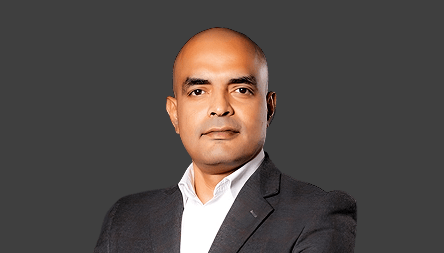
Anupal hosts The Leadership Equation Podcast with a practitioner’s lens on how real businesses are built, scaled, and sustained through cycles of growth and disruption. With over two decades of experience across technology, engineering, media, and digital payments organisations, he brings a grounded understanding of what it takes to translate ambition into execution.
The podcast reflects his belief that enduring enterprises are shaped not only by strategy and markets, but by the often-invisible interplay of people, culture, and capability that determines whether decisions truly compound over time. Through unscripted, long-form conversations with institution builders and senior leaders, Anupal explores how organisations create competitive advantage, stay relevant, and build lasting value.
The Leadership Equation is where business reality meets the human force behind it.